 Donate Now
Types of Disabilities
Some disabilities are obvious. Many are not. Knowing the range helps you recognize when someone may need patience or a little space, and keeps you from mistaking a disability for rudeness or defiance.
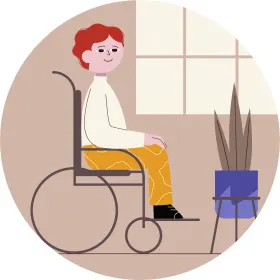
Physical disabilities affect movement, stamina, dexterity or the senses. They include paralysis and spinal cord injury, cerebral palsy, amputation, muscular dystrophy, multiple sclerosis, arthritis, and blindness or deafness.
How to help: ask before helping, and accept "no thanks." Never move or lean on a wheelchair, cane or walker without permission; it is part of the person's personal space. Speak to the person, not to their companion.
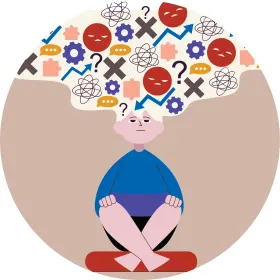
Intellectual disabilities affect learning, reasoning and everyday problem-solving. Examples include Down syndrome and other conditions present from childhood, as well as cognitive changes after a brain injury or stroke.
How to help: use short, clear sentences, give one instruction at a time, and allow extra time to respond. Talk to adults as adults.
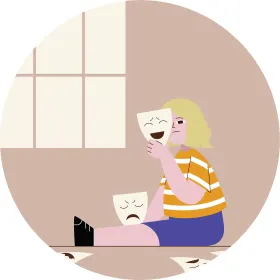
Psychiatric disabilities include conditions such as schizophrenia, bipolar disorder, severe depression, anxiety disorders and PTSD. They are common, often invisible, and can change from day to day.
How to help: stay calm, keep your voice low, and avoid crowding or arguing. If someone seems to be in crisis, call or text 988 (Suicide & Crisis Lifeline) or ask for a crisis-trained responder.
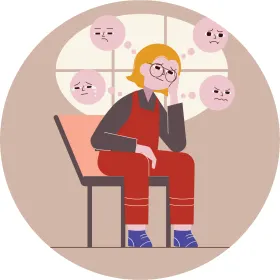
Some disabilities show up mainly as difficulty regulating emotions or behavior, for example in some children and adults with ADHD, trauma histories or sensory processing differences. Outbursts are usually signs of overload, not bad parenting or bad character.
How to help: don't stare, comment or film. Offer space, reduce noise if you can, and give the caregiver a kind word instead of a complaint.
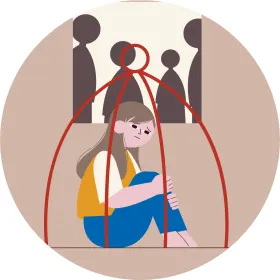
Disabilities such as autism, speech and language disorders, and hearing loss can affect how a person communicates and reads social cues. Someone may not make eye contact, may repeat words or movements, or may use a device or sign language to talk.
How to help: be patient, don't finish people's sentences, and don't assume that a person who doesn't speak doesn't understand.
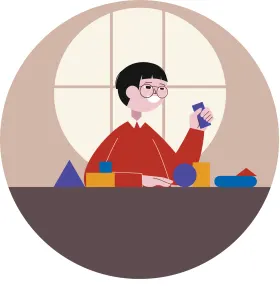
Developmental disabilities begin in childhood and last throughout life. They include autism spectrum disorder, cerebral palsy, Down syndrome, fetal alcohol spectrum disorders and many others. Some adults with developmental disabilities need lifelong support from family and caregivers.
How to help: include people rather than avoid them, and remember that the caregiver at their side may be managing far more than you can see.
A large share of disabilities can't be seen at a glance: autism, chronic pain, epilepsy, diabetes, traumatic brain injury, mental illness, low vision and hearing loss, among many others. Some people wear a sunflower lanyard or carry a card to signal a hidden disability, but most do not. The safest assumption is that anyone who is acting unexpectedly may have a reason you can't see.
Some people prefer person-first language ("a person with autism"); others prefer identity-first language ("an autistic person"). When you aren't sure, follow the lead of the person you're talking with, and avoid outdated or pitying terms such as "handicapped," "suffers from" or "confined to a wheelchair."