 Donate Now
What We Do
Our work is built around one idea: people treat disabled persons better when they know what they are seeing. These are the programs your support makes possible.
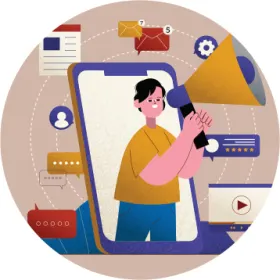
We create short, memorable messages that ask the public to "See Disabled Persons", to notice, acknowledge and encourage the people around them instead of looking away. Campaigns are designed for the places people actually look: t-shirts, billboards, bus stops, social media and online ads.
Each campaign focuses on one simple behavior, such as giving a family space during a meltdown, speaking directly to a person who uses a wheelchair, or being patient with someone who communicates differently.
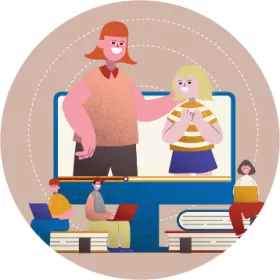
Many uncomfortable or dangerous encounters happen because people don't recognize a disability, especially invisible ones like autism, intellectual disability, mental illness or brain injury. We publish plain-language guidance on the types of disability and how to interact respectfully, and we share it widely on Facebook, Instagram, LinkedIn, X and YouTube.
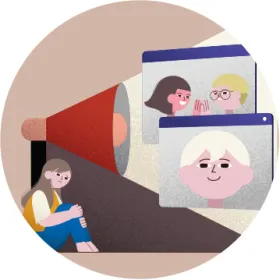
Our News page is updated several times a day with disability-related stories from across the country: the encouraging ones that show inclusion working, and the hard ones that show what happens when disability is ignored. We also invite readers to share their own stories; every submission is reviewed by a person before it is published.
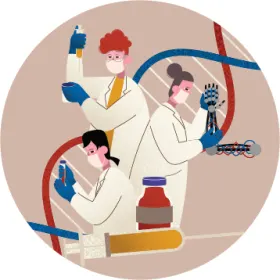
Policies decide how a disabled person is treated at a store counter, at an airport, on a bus or during a police stop. We talk with public-facing businesses and government services about practical changes, such as staff awareness, quiet options, flexible lines, and clear guidance for security and first responders, that accommodate all types of disabilities, not only the most visible ones.
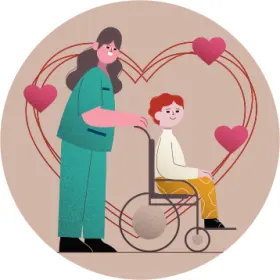
Parents, siblings and caregivers often absorb the stares, comments and complaints. Our messages remind the public that a caregiver doing their best deserves a smile and a little patience, and remind caregivers that they are not alone.

People with disabilities are far more likely than others to be victims of violence and to be hurt in encounters with authorities. By helping the public and first responders recognize disability early, we aim to prevent the misunderstandings that lead to tragedy.
Contributions go to the mission itself: designing and placing awareness messages (printed materials, apparel, outdoor and online advertising), producing educational content, and operating this website and its news service. As a 501(c)(3) public charity (EIN 83-3177592), we keep records of every donation, and gifts are tax-deductible to the extent allowed by law.